





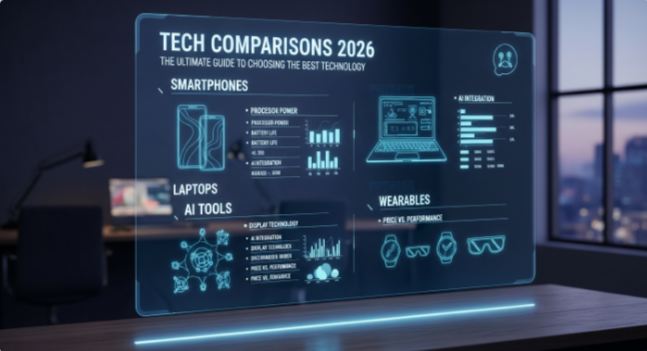
Tech comparisons is also advancing at a pace faster than ever before, and therefore, comparisons of technology play an incredibly vital role when it comes to making smart decisions. Whether you are looking for new smartphones, laptops, operating systems, cloud computing, or artificial intelligence solutions, making comparisons of technology is vital.
In this guide, you’ll find the best information on how technology is compared, how to compare technology, the most important categories for comparison, and the future of technology comparison.
What Are Tech Comparisons and Why They Matter
Tech comparisons involve analyzing two or more technologies based on:
-
Performance
-
Price
-
Features
-
Compatibility
-
Reliability
-
User experience
-
Future support
Because new devices and software launch constantly, buyers often feel overwhelmed. Smart comparison strategies reduce confusion and prevent costly mistakes.
Key Reasons Tech Comparisons Are Important
1. Prevent overspending
Marketing hype can push expensive products that don’t match your needs. Comparisons highlight real value.
2. tech comparisons: Improve productivity
Choosing the right tool increases efficiency in work, study, and entertainment.
3. Ensure long-term usability
Some tech becomes obsolete quickly. Comparisons reveal which options offer longevity and updates.
4. Reduce buyer’s remorse
Informed decisions lead to higher satisfaction.
Core Factors Used in Modern Tech Comparisons
1. Performance Benchmarks
Performance remains the most critical comparison metric. Common benchmarks include:
-
Processor speed
-
RAM efficiency
-
Storage performance
-
Graphics capability
-
Battery life
-
Network speed
Synthetic benchmarks and real-world testing both matter. Real-world use often tells the true story.
2. Price-to-Value Ratio
The cheapest device isn’t always the best—and the most expensive isn’t always premium.
Smart tech comparisons evaluate:
-
Cost vs features
-
Maintenance expenses
-
Subscription fees
-
Upgrade potential
Value-based comparison is more useful than price alone.
3. User Experience (UX)
UX determines daily satisfaction. Important UX elements include:
-
Interface design
-
Ease of setup
-
Learning curve
-
Accessibility features
-
Ecosystem integration
Even powerful technology can fail if usability is poor.
4. Compatibility and Ecosystem
Modern devices rarely work alone. Consider:
-
App availability
-
Cross-device syncing
-
File format support
-
Smart home integration
-
Cloud connectivity
Ecosystems often lock users in, so comparisons should examine long-term flexibility.
5. Security and Privacy
Security has become a top priority in 2026 tech comparisons.
Evaluate:
-
Encryption standards
-
Software update frequency
-
Privacy policies
-
Data collection practices
-
Biometric protection
Ignoring security can lead to serious risks.
Smartphone Tech Comparisons
Smartphones remain the most compared technology worldwide.
Key Comparison Metrics
-
Camera quality
-
Battery endurance
-
Display technology
-
Processor performance
-
Software support duration
-
Charging speed
Flagship vs Mid-Range Phones
Flagships offer:
-
Premium materials
-
Advanced cameras
-
Long software updates
-
High performance
Mid-range devices provide:
-
Better affordability
-
Strong everyday performance
-
Good battery life
For most users, mid-range phones now deliver the best value.
Laptop Tech Comparisons
Laptops vary widely by purpose.
Ultrabooks vs Gaming Laptops
Ultrabooks:
-
Thin and lightweight
-
Long battery life
-
Ideal for students and professionals
Gaming laptops:
-
Powerful GPUs
-
High refresh-rate displays
-
Heavier and shorter battery life
Choosing depends entirely on workload.
Operating System Comparisons
Operating systems shape the entire computing experience.
Desktop OS Evaluation Criteria
-
Software compatibility
-
Security updates
-
Customization
-
Performance optimization
-
Developer support
Mobile OS Considerations
-
App ecosystem
-
Privacy controls
-
Device integration
-
Longevity of updates
The “best” OS always depends on user priorities, not popularity.
Cloud Service Tech Comparisons
Cloud computing dominates modern infrastructure.
Comparison Factors
-
Storage pricing
-
Upload/download speeds
-
Security certifications
-
Collaboration tools
-
AI integration
-
Reliability uptime
Businesses must prioritize scalability and compliance when comparing cloud platforms.
AI Tool Comparisons in 2026
Artificial intelligence is now central to tech comparisons.
Key AI Evaluation Metrics
-
Accuracy of results
-
Speed of responses
-
Multimodal capabilities
-
Integration with workflows
-
Data privacy handling
-
Pricing models
AI comparison is complex because tools evolve rapidly.
Smart Home Technology Comparisons
Smart homes continue expanding.
Devices Commonly Compared
-
Smart speakers
-
Security cameras
-
Smart thermostats
-
Lighting systems
-
Home automation hubs
Critical Comparison Factors
-
Voice assistant compatibility
-
App reliability
-
Automation flexibility
-
Security protection
-
Energy efficiency
Interoperability is becoming the most important factor.
Wearable Tech Comparisons
Wearables include:
-
Smartwatches
-
Fitness trackers
-
AR glasses
-
Health monitors
Comparison Metrics
-
Health tracking accuracy
-
Battery duration
-
Comfort and design
-
App ecosystem
-
Medical certifications
Health-focused comparisons are growing rapidly.
Gaming Technology Comparisons
Gaming tech evolves every year.
Comparison Areas
-
Console performance
-
PC hardware power
-
Game library size
-
Subscription services
-
VR/AR capabilities
Gamers must balance graphics, cost, and exclusive content.
Budget vs Premium Technology
Budget Tech Advantages
-
Affordable pricing
-
Good basic functionality
-
Ideal for casual users
Premium Tech Benefits
-
Better materials
-
Longer lifespan
-
Advanced features
-
Stronger support
The best choice depends on usage intensity.
How to Perform Your Own Tech Comparisons
Follow this proven method:
Step 1: Define Your Needs
Ask:
-
What tasks will I perform?
-
How often will I use it?
-
What is my budget?
Clear needs prevent confusion.
Step 2: Shortlist Options
Limit to 3–5 products to avoid overload.
Step 3: Compare Specifications
Focus on:
-
Performance
-
Battery
-
Storage
-
Connectivity
-
Updates
Ignore unnecessary marketing terms.
Step 4: Read Real User Reviews of tech comparisons
User experiences reveal:
-
Hidden flaws
-
Durability issues
-
Customer support quality
Real-world feedback is invaluable.
Step 5: Consider Long-Term Value
Think beyond purchase price:
-
Repairability
-
Software lifespan
-
Resale value
Long-term thinking leads to smarter choices.
Common Mistakes in Tech Comparisons
Avoid these errors:
1. Choosing based only on brand
Brand reputation doesn’t guarantee suitability.
2. Ignoring software updates
Outdated software reduces security and usability.
3. Overvaluing specs
Real performance matters more than numbers.
4. Forgetting ecosystem lock-in
Switching later may be costly.
5. Buying unnecessary features
Extra features often go unused.
Future Trends in Tech Comparisons (2026–2030)
1. AI-Driven Buying Assistants
AI will soon:
-
Analyze user behavior
-
Recommend personalized tech
-
Predict lifespan and value
Tech comparisons will become automated and predictive.
2. Sustainability as a Core Metric
Future comparisons will include:
-
Carbon footprint
-
Repairability scores
-
Recyclable materials
-
Energy efficiency
Eco-friendly tech is gaining priority.
3.tech comparisons: Subscription-Based Hardware
Devices may shift toward:
-
Monthly payment models
-
Continuous upgrades
-
Bundled cloud services
Ownership models are evolving.
4. Cross-Platform Integration
The best tech will:
-
Sync seamlessly across devices
-
Use shared AI assistants
-
Provide unified data ecosystems
Integration will outweigh raw specs.
Best Practices for Smart tech comparisons Decisions
-
Compare needs before features
-
Prioritize long-term usability
-
Check real-world reviews
-
Balance budget and quality
-
Consider security and privacy
These principles ensure confident purchases.
Conclusion: Mastering Tech Comparisons in the Digital Age
In a world filled with endless devices, apps, and platforms, tech comparisons are no longer optional—they are essential. Smart comparisons empower users to:
-
Save money
-
Boost productivity
-
Avoid poor purchases
-
Future-proof their technology
By focusing on performance, value, usability, security, and long-term support, anyone can make intelligent technology decisions in 2026 and beyond.
As innovation accelerates, the ability to compare technology wisely will become one of the most valuable digital skills a person can have.