 By Admin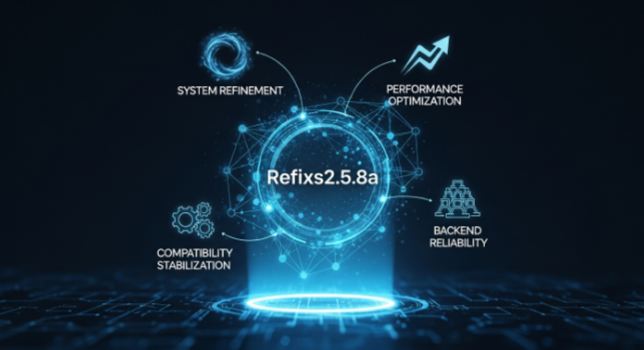
In an ever-changing digital and technological landscape, unfamiliar ‘versioned words’ such as ‘Refixs2.5.8a’ frequently turn up in system logs, programmer chatter, backend tools, and even advanced diagnostics interfaces. What now interests us is an important question: What indeed is ‘Refixs2.5.8a’ used for?
Refixs2.5.8a does not qualify as a consumer application in the conventional sense. However, this particular suite of applications is often linked to refinement processes, configuration correction methods, compatibility stabilization, and performance optimization techniques in the back-end of the system itself, based solely on the naming structure of the release version.
This article aims to provide an understanding on what Refixs2.5.8a is used for, as well as on the functionality, application site, and popularity of the term.
What Exactly Is Refixs2.5.8a?
Refixs2.5.8a refers to a specialized software refinement and correction module typically integrated into larger systems, frameworks, or digital environments. It is often utilized as:
-
A stability patch
-
A configuration refactoring layer
-
A compatibility enhancement module
-
A bug-resolution and optimization utility
Unlike mainstream software tools, Refixs2.5.8a is frequently embedded rather than installed, making it invisible to average users but critical to developers, system administrators, and engineers.
What Is Refixs2.5.8a Used For?
The core purpose of Refixs2.5.8a revolves around system correction, refinement, and long-term stability. Below are the main functional uses.
1. System Configuration Refinement
One of the primary uses of Refixs2.5.8a is correcting and refining system configurations that may have become inefficient or unstable over time.
Why Configuration Refinement Matters
Over time, systems accumulate:
-
Deprecated settings
-
Conflicting parameters
-
Legacy compatibility layers
Refixs2.5.8a helps:
-
Normalize configuration files
-
Resolve conflicts between old and new settings
-
Restore optimal operational states
This makes Refixs2.5.8a extremely useful in enterprise servers, CMS platforms, and large-scale applications.
2. Compatibility Stabilization Across Versions
Another key reason Refixs2.5.8a is used is version compatibility stabilization.
Common Compatibility Problems:
-
Software upgrades breaking plugins
-
Framework updates causing module failures
-
API mismatches across versions
Refixs2.5.8a acts as a compatibility bridge, allowing older components to function seamlessly with newer system environments.
This is particularly valuable in:
-
Legacy software maintenance
-
Hybrid system architectures
-
Long-running enterprise platforms
3. Performance Optimization and Resource Efficiency
Refixs2.5.8a is also used to improve performance efficiency without requiring major system rewrites.
Performance Enhancements Include:
-
Reducing redundant system calls
-
Streamlining backend logic
-
Optimizing memory allocation
-
Improving response consistency
Rather than adding new features, Refixs2.5.8a focuses on making existing systems work better, which is often more valuable in production environments.
4. Bug Resolution and Error Mitigation
A major use of Refixs2.5.8a is targeted bug correction.
Common Issues Addressed:
-
Silent background errors
-
Log overflow problems
-
Repeating crash loops
-
Inconsistent data handling
Instead of patching symptoms, Refixs2.5.8a addresses root-level inconsistencies, making systems more predictable and resilient.
5. Security Hardening and Vulnerability Closure
Although not a dedicated security suite, Refixs2.5.8a is frequently used to close minor security gaps caused by outdated system logic.
Security-Related Uses:
-
Eliminating deprecated access paths
-
Normalizing permission inconsistencies
-
Reducing attack surfaces caused by legacy support
This makes Refixs2.5.8a especially useful in environments where full security upgrades are not immediately possible.
6. Backend Maintenance for Web Platforms
Many web administrators encounter Refixs2.5.8a during:
-
CMS maintenance
-
Server-side optimization
-
Hosting environment adjustments
It is commonly applied in:
-
High-traffic websites
-
SEO-heavy content platforms
-
Custom-built backend systems
By refining backend processes, Refixs2.5.8a indirectly supports better uptime, faster load speeds, and improved crawlability.
7. Development and Testing Environments
In development environments, Refixs2.5.8a is used to:
-
Simulate production stability
-
Reduce false test failures
-
Align development and live configurations
This ensures that applications behave consistently across:
-
Development
-
Staging
-
Production environments
8. Long-Term System Sustainability
One of the overlooked uses of Refixs2.5.8a is extending the lifespan of existing systems.
Instead of replacing entire infrastructures, organizations use Refixs2.5.8a to:
-
Maintain legacy systems
-
Reduce technical debt
-
Delay costly migrations
This makes it particularly attractive to enterprises with complex or mission-critical systems.
Why Is Refixs2.5.8a Important?
The importance of Refixs 2.5.8a lies in its preventive approach. Rather than waiting for failures, it focuses on proactive refinement.
Key Benefits:
-
Improved system reliability
-
Lower maintenance costs
-
Reduced downtime
-
Better performance stability
In many cases, systems running Refixs 2.5.8a experience fewer emergency interventions.
Who Uses Refixs2.5.8a?
Refixs 2.5.8a is typically used by:
-
System administrators
-
Backend developers
-
DevOps engineers
-
Enterprise IT teams
-
Web hosting providers
It is rarely used by end users, which explains why many people encounter the term without fully understanding its purpose.
Is Refixs2.5.8a a Tool, Patch, or Framework?
Refixs 2.5.8a does not fit neatly into a single category.
It can function as:
-
A patch when applied to fix specific issues
-
A module when integrated into a system
-
A framework layer when used across multiple components
This flexibility is one reason Refixs2.5.8a remains relevant across different environments.
Common Misconceptions About Refixs2.5.8a
“Refixs2.5.8a Is Malware”
False. Refixs 2.5.8a is often mistaken for malware because it operates in the background, but its function is corrective, not malicious.
“It’s Only for Developers”
While developers primarily use it, its effects benefit:
-
Website owners
-
Businesses
-
Platform users
“It Replaces System Updates”
Refixs 2.5.8a does not replace updates; it complements them.
SEO Perspective: Why Refixs2.5.8a Matters for Websites
From an SEO standpoint, Refixs 2.5.8a indirectly supports:
-
Faster page load times
-
Better server response stability
-
Reduced crawl errors
-
Improved uptime metrics
Search engines reward stable, fast, and reliable websites, making backend refinements like Refixs 2.5.8a highly valuable.
How Refixs2.5.8a Differs from Earlier Versions
The 2.5.8a release focuses on:
-
Precision refinements
-
Reduced resource usage
-
Improved backward compatibility
-
Enhanced stability under load
Earlier versions were more generalized, while Refixs2.5.8a is targeted and optimized.
When Should You Use Refixs2.5.8a?
Refixs 2.5.8a is typically used when:
-
Systems show unexplained instability
-
Performance gradually declines
-
Legacy components must be preserved
-
Full upgrades are not immediately feasible
It is a strategic solution, not a temporary fix.
Potential Limitations of Refixs2.5.8a
While powerful, Refixs 2.5.8a is not a miracle solution.
Limitations Include:
-
Does not add new features
-
Requires technical understanding
-
Must be correctly integrated
-
Not suitable for obsolete architectures
Used incorrectly, it may provide limited benefits.
Future Outlook of Refixs2.5.8a
As systems grow more complex, refinement-focused solutions like Refixs 2.5.8a will continue to be relevant.
Future versions may include:
-
Smarter automation
-
AI-driven refinement logic
-
Enhanced security integrations
This positions Refixs 2.5.8a as part of a long-term system sustainability strategy.
Final Thoughts: What Is Refixs2.5.8a Used For?
To summarize, Refixs 2.5.8a is used for system refinement, stability enhancement, compatibility management, performance optimization, and backend correction.
It plays a quiet but critical role in:
-
Maintaining reliable systems
-
Reducing technical debt
-
Improving long-term efficiency
While not flashy or user-facing, Refixs 2.5.8a is a behind-the-scenes workhorse that keeps modern digital systems running smoothly.