





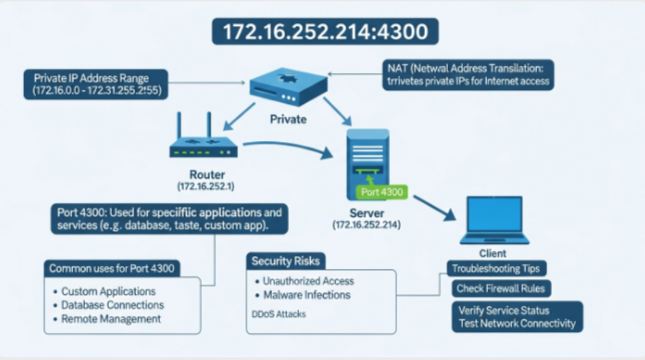
The keyword 172.16.252.214.4300 may look confusing at first glance, especially to non-technical users, but it represents a highly relevant concept in modern networking, cybersecurity, and internal system architecture. This string combines a private IP address with a specific port number, which together form a network endpoint often used for internal services, testing environments, and enterprise applications.
As businesses increasingly rely on internal networks, cloud infrastructure, and containerized applications, understanding addresses like 172.16.252.214.4300 has become more important than ever. Whether you’re a system administrator, developer, cybersecurity researcher, or just someone who encountered this address in logs or configuration files, this guide will break everything down in simple, SEO-friendly terms.
This article explores:
-
What 172.16.252.214.4300 means
-
Why it’s commonly used
-
How private IP ranges work
-
What port 4300 is typically associated with
-
Security considerations
-
Troubleshooting tips
-
SEO and technical relevance
Breaking Down 172.16.252.214.4300
To understand 172.16.252.214.4300, we need to look at its two core components:
1. The IP Address: 172.16.252.214
This IP address belongs to the 172.16.0.0 – 172.31.255.255 range, which is classified as a private IPv4 address space under RFC 1918.
Private IP addresses:
-
Are not routable on the public internet
-
Are used inside local networks
-
Help conserve public IP space
-
Improve internal network security
2. The Port Number: 4300
The number 4300 is a TCP or UDP port, which identifies a specific service or application running on the IP address.
Together, 172.16.252.214.4300 points to:
A specific service running on port 4300 of a private network device.
What Is a Private IP Address and Why It Matters
Private IP addresses like 172.16.252.214 are foundational to internal networking.
Key Characteristics of Private IPs
-
Cannot be accessed directly from the internet
-
Used by routers, servers, virtual machines, and IoT devices
-
Often hidden behind NAT (Network Address Translation)
-
Safer by default than public IPs
Why Organizations Use Private IPs
-
Improved security
-
Reduced IP costs
-
Better internal traffic control
-
Easier network segmentation
The use of 172.16.252.214.4300 strongly suggests an internal service, not a public website.
Understanding Port 4300 in Networking
Port numbers range from 0 to 65535 and are divided into categories:
-
Well-known ports: 0–1023
-
Registered ports: 1024–49151
-
Dynamic/private ports: 49152–65535
Port 4300 falls within the registered range, meaning it may be used by specific applications but is also commonly assigned for custom services.
Common Uses of Port 4300
-
Internal APIs
-
Monitoring dashboards
-
Development servers
-
Custom enterprise software
-
Database management tools
-
Local web services
In many cases, 172.16.252.214.4300 is used for internal web-based interfaces, accessible only within a company network.
Why You Might See 172.16.252.214.4300
There are many scenarios where this address appears:
1. Server Configuration Files
Developers often bind applications to private IPs like 172.16.252.214.4300 during development.
2. Firewall or Router Logs
Security logs frequently record internal traffic using IP and port combinations.
3. Docker or Kubernetes Environments
Containerized apps commonly expose services on non-standard ports such as 4300.
4. Corporate Intranets
Internal tools often run on private IP addresses for security reasons.
Is 172.16.252.214.4300 Safe or Dangerous?
The address itself is not dangerous. However, how it is used determines the risk level.
Generally Safe Because:
-
It’s a private IP
-
Not accessible from outside the network by default
-
Requires internal access or VPN
Potential Risks Include:
-
Misconfigured firewalls
-
Exposed ports through port forwarding
-
Weak authentication
-
Outdated services
If 172.16.252.214.4300 is accidentally exposed to the internet, it could become a security risk.
Cybersecurity Considerations for 172.16.252.214.4300
Best Practices
-
Restrict access using firewall rules
-
Enable authentication
-
Monitor logs regularly
-
Use HTTPS or encrypted protocols
-
Disable unused ports
Why Port Management Matters
Open ports are one of the most common attack vectors. Even internal ports like 4300 should be protected.
Troubleshooting Access to 172.16.252.214.4300
If you’re having trouble accessing 172.16.252.214.4300, consider the following:
1. Network Location
You must be on the same internal network or VPN.
2. Service Status
Check whether the application listening on port 4300 is running.
3. Firewall Rules
Ensure port 4300 is allowed internally.
4. IP Conflicts
Verify that 172.16.252.214 is assigned correctly.
How Developers Use 172.16.252.214.4300
Developers often choose private IPs with high-numbered ports for flexibility.
Common Development Scenarios
-
Local testing environments
-
Staging servers
-
API testing
-
Microservices communication
Using 172.16.252.214.4300 allows developers to simulate real-world conditions without public exposure.
SEO and Technical Relevance of 172.16.252.214.4300
From an SEO standpoint, keywords like 172.16.252.214.4300 are considered low-competition, high-intent technical queries.
Why This Keyword Matters
-
Users searching it want answers
-
Often linked to troubleshooting
-
Strong engagement potential
-
Ideal for technical blogs and guides
Creating detailed content around 172.16.252.214.4300 helps capture niche traffic from system administrators and developers.
Frequently Asked Questions (FAQ)
Is 172.16.252.214.4300 a real website?
No. It is a private IP and port combination, not a public website.
Can I access 172.16.252.214.4300 from home?
Only if you are connected to the internal network or VPN.
What service uses port 4300?
Port 4300 is commonly used for custom applications and internal tools.
Is it malware-related?
Not by default. It depends entirely on what service is running.
Should I block port 4300?
Only if it’s unused or exposed unnecessarily.
172.16.252.214.4300 vs Public IP Addresses
| Feature | Private IP (172.16.252.214.4300) | Public IP |
|---|---|---|
| Internet Access | No | Yes |
| Security | Higher | Lower |
| Cost | Free | Often Paid |
| Use Case | Internal | External |
Future of Private IP Usage
With the growth of:
-
Cloud computing
-
Zero-trust security
-
Microservices
-
Virtual networks
Private IP endpoints like 172.16.252.214.4300 will continue to play a critical role in modern IT infrastructure.
Final Thoughts on 172.16.252.214.4300
The keyword 172.16.252.214.4300 represents much more than a random string of numbers. It reflects how modern networks operate behind the scenes — securely, efficiently, and privately.
Understanding this address helps with:
-
Network troubleshooting
-
Cybersecurity awareness
-
Development workflows
-
SEO targeting for technical niches
If you encountered 172.16.252.214 4300 in logs, software, or documentation, now you know exactly what it means and why it matters.